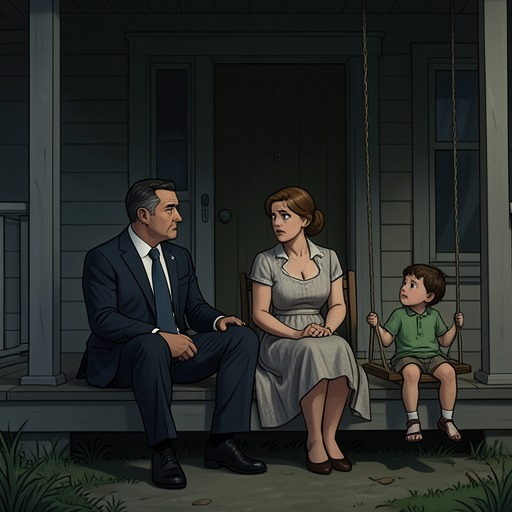
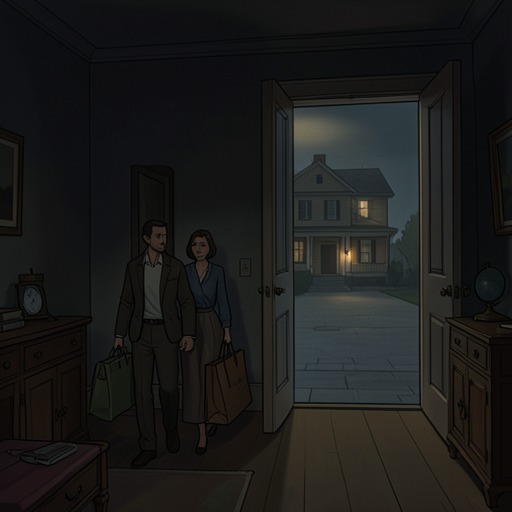
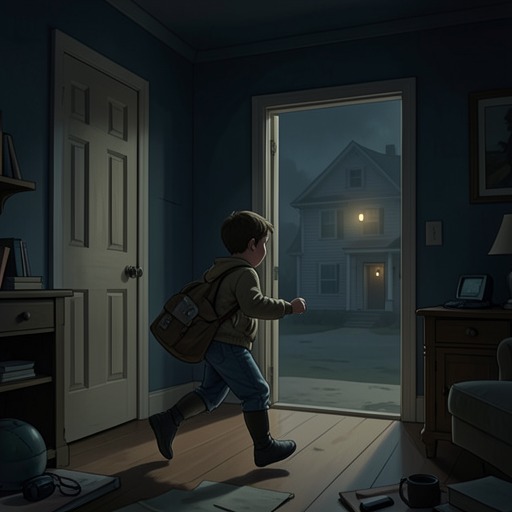
The first day of the vacation
The Summer Drive
[Amanda](entity:character-recall-character-amanda-f7c90eb37305) and [Clay](entity:character-recall-character-clay-9683381e0e8a) drive from [Brooklyn](entity:location-recall-location-b0361f31948e) toward their rented [Long Island](entity:location-recall-location-long-island-f692f10da472) house with [Archie](entity:character-recall-character-archie-3fc9acbae41a) and [Rose](entity:character-recall-character-rose-154df6dd1d30). Traffic, phones, work calls, and the clutter of family life accompany them into the countryside.
Their comfortable routines reveal a family balanced between affection and irritation, while the remoteness of their destination gradually loosens their connection to the world they know.
On the drive to the house
The Burger King Stop
The family stops at Burger King, where the children eat and [Rose](entity:character-recall-character-rose-154df6dd1d30) asks [Amanda](entity:character-recall-character-amanda-f7c90eb37305) to check how far away her friend Hazel lives. Amanda refuses the long detour, and Rose resents being treated like a child.
The episode captures the small bargains and misunderstandings of family life, as well as the distance between Rose’s social world and her parents’ priorities.
That afternoon
The Painted Brick House
The family reaches the white-painted brick house they found through [Airbnb](entity:organization-recall-organization-airbnb-0e24358f440a). The owners’ careful furnishings and costly comforts make the rental feel almost like a home of their own.
[Amanda](entity:character-recall-character-amanda-f7c90eb37305) watches [Archie](entity:character-recall-character-archie-3fc9acbae41a) and [Rose](entity:character-recall-character-rose-154df6dd1d30) rush toward the pool, briefly savoring the vacation she insisted on taking while the children are still young enough to enjoy it with her.
The first afternoon
A Vacation Pantry
[Amanda](entity:character-recall-character-amanda-f7c90eb37305) drives to a grocery store and fills the car with food for the week, balancing healthy provisions with snacks and treats the children will actually eat. A young bagger briefly stirs a fantasy of another life.
Work emails soon restore her familiar sense of being needed. She returns with groceries and cigarettes for [Clay](entity:character-recall-character-clay-9683381e0e8a), imagining the meals, swimming, and sex that might make the rental feel like their own.
The first afternoon
Clay’s Secret Cigarette
While [Amanda](entity:character-recall-character-amanda-f7c90eb37305) is away, [Clay](entity:character-recall-character-clay-9683381e0e8a) smokes outside, then cooks hamburgers for the family. The house and pool stir a physical confidence in him, along with a passing fantasy of owning such a place.
His domestic competence is real, but so is his dependence on small private indulgences. His cigarettes are supposed to be a secret from Amanda, though neither of them is fooled.
The first night
The First Vacation Night
After dinner and showers, [Amanda](entity:character-recall-character-amanda-f7c90eb37305) checks her work email despite being on vacation. [Clay](entity:character-recall-character-clay-9683381e0e8a) joins her later, and they have sex before slipping into the hot tub under the dark country sky.
The couple’s intimacy is affectionate, familiar, and still open to novelty. Their return to bodily pleasure gives the trip its first sense of escape from ordinary life.
The second morning and afternoon
The Beach Trip
The family packs for the beach and crosses a bridge to the shore. They pass a memorial to the victims of Flight 800 before settling into a windy day of reading, swimming, food, and watching the lifeguards.
The outing proves pleasant but tiring. The ocean is both a respite and a reminder of how exposed and small the family is in the larger world.
The second afternoon
Back From the Shore
After the beach, the family returns to the house, rinses away the sand, and settles back into its new routines. [Clay](entity:character-recall-character-clay-9683381e0e8a) makes another grocery run while [Amanda](entity:character-recall-character-amanda-f7c90eb37305) prepares pasta and asks him to bring home more food.
She sees a mother deer and young ones beyond the pool. The animals seem like a fitting image of family life, though Amanda cannot say what they eat or what their presence might mean.
The second night
A Knock in the Dark
After the children go to bed, [Amanda](entity:character-recall-character-amanda-f7c90eb37305) and [Clay](entity:character-recall-character-clay-9683381e0e8a) hear a murmur and then a knock at the door. They move cautiously through the house, unsure whether the visitor is harmless or dangerous.
Clay opens the door to an older Black couple, [George Herman Washington](entity:character-recall-character-george-herman-washi-d2c2259fc873) and [Ruth](entity:character-recall-character-ruth-5948dc08d1c1), who apologize for arriving unannounced. Their politeness unsettles Amanda almost as much as their unexpected presence.
Moments after the knock
The House Owners
[George Herman Washington](entity:character-recall-character-george-herman-washi-d2c2259fc873) explains that he and [Ruth](entity:character-recall-character-ruth-5948dc08d1c1) own the house and recognize [Amanda](entity:character-recall-character-amanda-f7c90eb37305) from their rental correspondence. Amanda realizes that she had imagined the owners as people unlike the couple standing before her.
The revelation changes the balance of the encounter but does not dispel her suspicion. [Clay](entity:character-recall-character-clay-9683381e0e8a) has already let them inside, and Amanda worries about the strangers’ intentions and her sleeping children.
Late the second night
The Blackout Alert
[George Herman Washington](entity:character-recall-character-george-herman-washi-d2c2259fc873) and [Ruth](entity:character-recall-character-ruth-5948dc08d1c1) explain that they were driving back toward [Manhattan](entity:location-recall-location-5e470c74b89c) when the lights went out. They live on a high floor and feared being unable to get home safely.
[Amanda](entity:character-recall-character-amanda-f7c90eb37305) produces a brief news alert reporting a major blackout on the [East Coast of the United States](entity:location-recall-location-778eee3c98e6). The lights remain on at the house, but the couple’s account makes the outside world feel suddenly uncertain.
Late the second night
The Offer to Stay
[George Herman Washington](entity:character-recall-character-george-herman-washi-d2c2259fc873) offers to refund part of the rental cost and suggests that he and [Ruth](entity:character-recall-character-ruth-5948dc08d1c1) take the downstairs suite. [Clay](entity:character-recall-character-clay-9683381e0e8a) sees a practical solution; [Amanda](entity:character-recall-character-amanda-f7c90eb37305) worries that the offer and the circumstances are too improvised to trust.
The group attempts to consult the rental terms online, but the connection fails. Money, property, and good manners cannot quickly settle the question of who belongs in the house.
Late the second night
The Private Disagreement
In the bedroom, [Amanda](entity:character-recall-character-amanda-f7c90eb37305) tells [Clay](entity:character-recall-character-clay-9683381e0e8a) that the Washingtons are strangers and could be dangerous. Clay argues that they are frightened homeowners who need shelter, and that letting them stay is the decent choice.
Amanda remains unconvinced, especially where [Rose](entity:character-recall-character-rose-154df6dd1d30) is concerned. Clay’s confidence in doing the right thing is mixed with a desire to see himself as a good person.
Before dawn
The Emergency Broadcast
The group tries the television and finds only the [Emergency Broadcast System](entity:organization-recall-organization-34b411ed0c9f) screen and a repeating tone. The broadcast offers no useful explanation, and the other channels are blank.
[Ruth](entity:character-recall-character-ruth-5948dc08d1c1) wonders whether the blackout signals something larger, while [Clay](entity:character-recall-character-clay-9683381e0e8a) urges everyone not to let speculation take over. The failure of familiar sources of information sharpens the fear they are trying to contain.
The small hours before morning
A Shared Meal
The four adults return to the kitchen, where [Clay](entity:character-recall-character-clay-9683381e0e8a) serves leftover pasta and [Ruth](entity:character-recall-character-ruth-5948dc08d1c1) washes the dishes. Their conversation turns to past blackouts, terrorist attacks, and the limits of what they can know.
The meal briefly makes strangers into a household. Yet their stories do not explain why the lights failed, and the familiar rituals of eating and cleaning offer only temporary comfort.
Late that night
Ruth Belowstairs
[George Herman Washington](entity:character-recall-character-george-herman-washi-d2c2259fc873) takes [Ruth](entity:character-recall-character-ruth-5948dc08d1c1) downstairs to the in-law suite, where they have stored food, water, linens, and other supplies. The couple had prepared the house for emergencies without expecting this one.
Ruth worries about their daughter, [Maya](entity:character-recall-character-maya-ccfe93b60cb8), and her grandsons. Their well-stocked rooms provide practical security, but cannot tell them whether their family is safe or what has happened beyond the house.
The next morning
Morning News Alerts
[Rose](entity:character-recall-character-rose-154df6dd1d30) wakes [Amanda](entity:character-recall-character-amanda-f7c90eb37305) to report that the television is not working. Amanda finds several alerts on her phone about the blackout and a hurricane, including one garbled message, but cannot open the stories.
The ordinary morning is still there—the clock works, coffee can be made, and Rose wants entertainment—but the family cannot tell whether the communications failure is local or part of a wider emergency.
Early the second morning
Rose Sees the Deer
Sent outside while her parents talk, [Rose](entity:character-recall-character-rose-154df6dd1d30) notices deer in the yard. As she looks more carefully, their number seems to multiply until the woods appear full of them.
Rose senses that the unnatural quiet and heat mean something, although she cannot explain what she sees. The adults have not yet recognized the scale of the animals’ presence.
Later that morning
Coffee With Ruth
[Ruth](entity:character-recall-character-ruth-5948dc08d1c1) comes upstairs and tells [Amanda](entity:character-recall-character-amanda-f7c90eb37305) that the landline is dead. They discuss the alerts, the hurricane, their children, and their work while [Clay](entity:character-recall-character-clay-9683381e0e8a) makes coffee.
Their conversation begins as cautious small talk, shaped by age, class, and family obligations. Amanda recognizes that Ruth may be an ally, but neither woman can offer the reassurance the other wants.
Late the second morning
A Plan to Find News
[George Herman Washington](entity:character-recall-character-george-herman-washi-d2c2259fc873) proposes driving to the home of [Danny](entity:character-recall-character-danny-318bc697472f), the contractor who renovated the house. [Clay](entity:character-recall-character-clay-9683381e0e8a) instead says he will go into town to find a newspaper or someone who knows what is happening.
[Amanda](entity:character-recall-character-amanda-f7c90eb37305) would rather keep Clay close, but he wants to prove he can take action. He leaves without a reliable phone, a map, or a clear understanding of the roads.
Late morning
The Siblings Enter the Woods
Bored by the pool and the adults, [Archie](entity:character-recall-character-archie-3fc9acbae41a) and [Rose](entity:character-recall-character-rose-154df6dd1d30) slip into the woods. They discover a small shed and imagine that someone might sleep there and watch the house through its window.
Their teasing gives way to genuine unease, then to the pleasure of exploring together. Their old sibling rivalry briefly becomes cooperation as they follow their curiosity farther from the adults.
Around midday
Clay Loses the Road
[Clay](entity:character-recall-character-clay-9683381e0e8a) drives away from the house intending to reach town, but the country roads and familiar-looking fields leave him unsure of his route. His phone offers no help, and turning around only makes the landscape feel less recognizable.
He is forced to confront how dependent he is on routine and navigation technology. His confident errand becomes an anxious attempt to find his way back to his family.
During Clay’s drive
The Woman at the Roadside
[Clay](entity:character-recall-character-clay-9683381e0e8a) meets a distressed woman in a white polo shirt who speaks rapidly in Spanish. She appears to be trying to tell him something urgent, but he cannot understand her and has no working phone to translate.
Afraid and overwhelmed, Clay drives away without helping her. His failure becomes a private shame, and the scene exposes how easily his sense of decency collapses when faced with another person’s fear.
Around midday
A House Beyond the Trees
Farther into the woods, [Archie](entity:character-recall-character-archie-3fc9acbae41a) and [Rose](entity:character-recall-character-rose-154df6dd1d30) discover another house, with a lawn, pool, and play equipment. They do not approach it, but the sight convinces them that the woods contain more than the adults have acknowledged.
The children move on without realizing that their father is nearby, driving through the same countryside. Their separate journeys deepen the sense that the family is losing its ordinary hold on one another.
Around midday
The Noise
A sudden, immense noise tears across the countryside. [Amanda](entity:character-recall-character-amanda-f7c90eb37305) and [George Herman Washington](entity:character-recall-character-george-herman-washi-d2c2259fc873) experience it at the pool, [Clay](entity:character-recall-character-clay-9683381e0e8a) hears it on the road, and [Archie](entity:character-recall-character-archie-3fc9acbae41a) and [Rose](entity:character-recall-character-rose-154df6dd1d30) are caught in the woods.
The sound is unlike anything they can name and is powerful enough to make Archie fall to his knees and crack glass in the house. It divides the day into a before and an after without explaining what has changed.
Immediately after the first noise
Amanda Runs to the Woods
[Amanda](entity:character-recall-character-amanda-f7c90eb37305) races through the yard and into the woods, searching for [Archie](entity:character-recall-character-archie-3fc9acbae41a) and [Rose](entity:character-recall-character-rose-154df6dd1d30). She cannot make herself call out at first, afraid that her voice might drown out a response from the children.
She finds them by instinct or chance, and the three cling to one another. Her search makes the abstract disaster immediate: her first concern is not its cause, but whether her children are alive.
Minutes after the noise
The Family Reunites
The children are dirty and frightened but appear physically intact. [Ruth](entity:character-recall-character-ruth-5948dc08d1c1) gives [Archie](entity:character-recall-character-archie-3fc9acbae41a) water, while [Amanda](entity:character-recall-character-amanda-f7c90eb37305) cleans [Rose](entity:character-recall-character-rose-154df6dd1d30)’s minor scrapes and comforts her in the bathroom.
The adults trade possible explanations, from a plane to a sonic boom, but none fits the clear sky and the absence of normal air traffic. Their need to name the event runs up against the limits of what they have seen.
Shortly after the first noise
Clay Returns Empty-Handed
[Clay](entity:character-recall-character-clay-9683381e0e8a) finds his way back to the house after hearing the noise. [Amanda](entity:character-recall-character-amanda-f7c90eb37305), who feared he was dead or lost for good, embraces him and demands to know what he learned.
He admits that he never reached town and lies about not having seen anyone. His return restores the family’s physical unity, but his silence about the roadside woman leaves his failure unacknowledged.
The afternoon after the first noise
The Family Chooses Shelter
The adults agree that the noise was not thunder and that something serious is happening. Rain begins, and they decide to stay at the house for now rather than attempt the roads.
[Amanda](entity:character-recall-character-amanda-f7c90eb37305) insists on filling bathtubs in case the water supply fails. The house offers food, power, and shelter, but none of them can establish that it is genuinely safe.
That afternoon
Archie Develops a Fever
[Amanda](entity:character-recall-character-amanda-f7c90eb37305) checks on [Archie](entity:character-recall-character-archie-3fc9acbae41a) and finds him disoriented and feverish. He vomits as his parents bring him into the living room, where [Ruth](entity:character-recall-character-ruth-5948dc08d1c1) finds a thermometer and measures his temperature.
The sudden illness turns the crisis from a distant emergency into a threat inside the family. Amanda focuses on caring for her son because she cannot control the larger catastrophe.
That afternoon
Amanda and Ruth Cooperate
[Ruth](entity:character-recall-character-ruth-5948dc08d1c1) offers to wash the family’s soiled clothes while the power is still available. [Amanda](entity:character-recall-character-amanda-f7c90eb37305) and Ruth talk about their fears, their children, and the possibility that whatever is happening may affect them all.
Amanda admits that [Archie](entity:character-recall-character-archie-3fc9acbae41a) needs a doctor. Ruth cannot promise comfort, but she offers the practical solidarity of staying together and helping with what is immediately in front of them.
That evening
Cake and a Quiet Dinner
[Rose](entity:character-recall-character-rose-154df6dd1d30) bakes a boxed cake, decorating it with supplies [Ruth](entity:character-recall-character-ruth-5948dc08d1c1) helps her find. The adults prepare dinner and try to maintain ordinary conversation while [Archie](entity:character-recall-character-archie-3fc9acbae41a) rests with a fever.
The meal feels almost festive, but its rituals cannot make the danger disappear. The family’s small acts of cooking, eating, and cleaning become a temporary defense against helplessness.
That evening
Packing and Reassurance
[Amanda](entity:character-recall-character-amanda-f7c90eb37305) begins packing the family’s clothes, determined that they will return to [Brooklyn](entity:location-recall-location-b0361f31948e). [Clay](entity:character-recall-character-clay-9683381e0e8a) is unsure whether leaving is wise, but neither can explain what is happening or how long they might be trapped.
They talk about [Archie](entity:character-recall-character-archie-3fc9acbae41a), the noise, and the Washingtons. Their conversation shows how fear remains private even between spouses, though each depends on the other for reassurance.
Later that evening
The Cracked Door
[Amanda](entity:character-recall-character-amanda-f7c90eb37305) and [Clay](entity:character-recall-character-clay-9683381e0e8a) notice a long crack in the glass door leading to the deck. They understand it as a physical trace of the day’s noise, not merely a frightening memory.
Clay and Amanda go outside, where [George Herman Washington](entity:character-recall-character-george-herman-washi-d2c2259fc873) joins them in the hot tub. Their calm conversation about the damaged glass and their fears is briefly interrupted by a splash in the pool.
Late that night
The Market Curve
[George Herman Washington](entity:character-recall-character-george-herman-washi-d2c2259fc873) tells [Amanda](entity:character-recall-character-amanda-f7c90eb37305) that he sensed trouble in the financial markets before the lights went out. He believes years of studying patterns and information have taught him how to read what is coming.
His confidence falters as he admits that not everything can be known. The crisis challenges the faith that has made him successful: that careful observation can turn uncertainty into a manageable risk.
Late that night
Flamingos in the Pool
A pink bird moves through the pool, and the adults realize it is a flamingo. More appear, strutting across the lawn before several rise into the night sky.
The sight is undeniable but impossible to explain. The birds turn the adults’ familiar landscape into something uncanny and expose how quickly logic gives way when the world produces what should not be there.
After the flamingos appear
The Decision to Stay
The adults debate whether to leave for home or remain in the house. [Amanda](entity:character-recall-character-amanda-f7c90eb37305) points out that [Archie](entity:character-recall-character-archie-3fc9acbae41a) needs medical attention, while [Ruth](entity:character-recall-character-ruth-5948dc08d1c1) fears the dangers on the roads and does not want to leave her home.
[Clay](entity:character-recall-character-clay-9683381e0e8a) admits that he wants to stay because he is afraid to drive into an unknown world. The group has no shared explanation, only a fragile agreement to shelter together for the moment.
Later that night
The Second Wave of Noise
Several more noises strike, cracking a window and a pendant light. The adults and children scream and gather together, while the source remains hidden from them.
The narration reveals that American aircraft are racing through the sky as part of a military response, but the people in the house cannot know this. The unexplained violence deepens their fear and damages the remaining illusion of ordinary safety.
After the later noises
The Family Bed
The family crowds into the large bed rather than leaving the children alone. [Clay](entity:character-recall-character-clay-9683381e0e8a) and [Amanda](entity:character-recall-character-amanda-f7c90eb37305) listen to [Archie](entity:character-recall-character-archie-3fc9acbae41a) and [Rose](entity:character-recall-character-rose-154df6dd1d30) sleep and worry over their ability to protect them.
The night brings no answers. Their closeness is both comfort and a recognition of their limits: parental love cannot guarantee that the children will remain safe.
The following morning
Morning After the Drinking
[Amanda](entity:character-recall-character-amanda-f7c90eb37305) wakes hungover and vomits, while [Clay](entity:character-recall-character-clay-9683381e0e8a) and [Archie](entity:character-recall-character-archie-3fc9acbae41a) also struggle awake. The air-conditioning has stopped, and the house is hot with the bodies that spent the night together.
Clay brings water to the family, trying to return to practical care. Their symptoms seem consistent with drinking, but their uncertainty about the broader crisis makes even an ordinary hangover feel ominous.
That morning
Archie Loses His Teeth
As [Amanda](entity:character-recall-character-amanda-f7c90eb37305) checks on him, [Archie](entity:character-recall-character-archie-3fc9acbae41a) discovers that his teeth are loose. Several fall from his mouth into his hand, leaving him bloody and terrified even though he says he feels physically well.
His parents cannot explain the change or decide whether it is connected to the noise. The unexplained abnormal tooth loss makes the family’s crisis intimate and bodily, beyond the reach of ordinary reassurance.
Soon after Archie loses his teeth
A Hospital Plan
The adults inspect [Archie](entity:character-recall-character-archie-3fc9acbae41a) and agree that he should be seen by a doctor. [George Herman Washington](entity:character-recall-character-george-herman-washi-d2c2259fc873) offers to draw directions to a nearby hospital, while [Amanda](entity:character-recall-character-amanda-f7c90eb37305) insists that the family cannot simply wait without acting.
Archie says he feels fine and does not want to go. His calm does little to settle the adults, who must choose between trusting his account and responding to what his body has done.
That morning
Rose Goes Missing
While the adults concentrate on [Archie](entity:character-recall-character-archie-3fc9acbae41a), they realize [Rose](entity:character-recall-character-rose-154df6dd1d30) is no longer in the house. [Amanda](entity:character-recall-character-amanda-f7c90eb37305) searches the bedrooms, bathrooms, closets, and living areas, but cannot find her.
The disappearance shifts the adults’ attention from a medical emergency to an immediate search. Amanda’s fear becomes sharply focused: she needs to find her daughter, not speculate about the world beyond the house.
Minutes after Rose is missed
The First Search
The adults search the house and garage, considering whether [Rose](entity:character-recall-character-rose-154df6dd1d30) is hiding or exploring. [Archie](entity:character-recall-character-archie-3fc9acbae41a) believes she may have gone into the woods but does not explain why he thinks so.
[Amanda](entity:character-recall-character-amanda-f7c90eb37305) and [Ruth](entity:character-recall-character-ruth-5948dc08d1c1) go outside while [Clay](entity:character-recall-character-clay-9683381e0e8a) and [George Herman Washington](entity:character-recall-character-george-herman-washi-d2c2259fc873) search other parts of the property. Their attempts to remain methodical cannot hide the dread that Rose may be lost or hurt.
During the search
Archie Collapses
[Archie](entity:character-recall-character-archie-3fc9acbae41a) goes outside and collapses in the grass, vomiting fluid and blood. [Clay](entity:character-recall-character-clay-9683381e0e8a) and [George Herman Washington](entity:character-recall-character-george-herman-washi-d2c2259fc873) find him and carry him back into the house with [Ruth](entity:character-recall-character-ruth-5948dc08d1c1)’s help.
The family now has a missing child and a visibly deteriorating one. George Herman Washington decides that he and Clay must take Archie toward medical help, despite Ruth’s fear of being left behind.
Shortly after Archie collapses
The Split Decision
[George Herman Washington](entity:character-recall-character-george-herman-washi-d2c2259fc873) insists that he and [Clay](entity:character-recall-character-clay-9683381e0e8a) take [Archie](entity:character-recall-character-archie-3fc9acbae41a) toward a hospital and promises [Ruth](entity:character-recall-character-ruth-5948dc08d1c1) he will return within an hour. Ruth does not want him to leave, but agrees to stay with [Amanda](entity:character-recall-character-amanda-f7c90eb37305) and continue searching for [Rose](entity:character-recall-character-rose-154df6dd1d30).
Clay helps Archie into the car while George Herman Washington sets a timer. Their plan is driven by parental responsibility, but it rests on a promise that neither man can know he will be able to keep.
On the drive away from the house
The Roadside Confession
As [George Herman Washington](entity:character-recall-character-george-herman-washi-d2c2259fc873) drives, [Clay](entity:character-recall-character-clay-9683381e0e8a) admits that he encountered a distressed woman speaking Spanish during his earlier trip. He says that he left without understanding her or helping her.
Clay’s confession exposes a moral failure he had hidden from [Amanda](entity:character-recall-character-amanda-f7c90eb37305). He is already ashamed, and the woman’s unknown fate weighs on him as he tries to focus on finding help for [Archie](entity:character-recall-character-archie-3fc9acbae41a).
That morning
Danny’s Refusal
[George Herman Washington](entity:character-recall-character-george-herman-washi-d2c2259fc873) stops at [Danny](entity:character-recall-character-danny-318bc697472f)’s home, hoping the contractor will know more or offer a practical plan. Danny says he has heard of the blackout and the repeated noises, and has decided to stay behind locked doors.
Danny refuses to accompany them or provide meaningful help. His caution forces George Herman Washington and [Clay](entity:character-recall-character-clay-9683381e0e8a) to recognize that the social instincts they expected to rely on may not survive the emergency.
During the visit to Danny
The Deer Migration
[Danny](entity:character-recall-character-danny-318bc697472f) tells them he saw not a few deer but a vast migration moving through the area. The scale of the animals’ movement suggests that something beyond ordinary human observation is driving them.
The account connects [Rose](entity:character-recall-character-rose-154df6dd1d30)’s earlier sighting to a regional warning. The animals appear to be responding to a change the people cannot perceive or name.
Less than an hour after leaving
The Men Turn Back
[George Herman Washington](entity:character-recall-character-george-herman-washi-d2c2259fc873) and [Clay](entity:character-recall-character-clay-9683381e0e8a) decide not to continue to the hospital. [Archie](entity:character-recall-character-archie-3fc9acbae41a) says he does not think they should go, and the men accept that the roads and the outside world may be more dangerous than staying put.
They return to the house before the promised hour is up. Their aborted trip leaves Archie without medical care, while [Rose](entity:character-recall-character-rose-154df6dd1d30) remains missing and the group’s choices grow narrower.
While the men are away
Amanda and Ruth Keep Searching
[Amanda](entity:character-recall-character-amanda-f7c90eb37305) and [Ruth](entity:character-recall-character-ruth-5948dc08d1c1) search the shed and house, repeatedly calling for [Rose](entity:character-recall-character-rose-154df6dd1d30). They argue about what to do, then recognize that neither can offer the certainty the other wants.
Their fear becomes a bond rather than a contest. Both women are mothers waiting for children whose safety they cannot verify, and their alliance grows out of shared helplessness.
The following morning
Rose Leaves for Supplies
[Rose](entity:character-recall-character-rose-154df6dd1d30) wakes with the conviction that her family needs supplies and other people. She packs water, a banana, a nectarine, and a book, then sets off through the woods toward the neighboring house she and [Archie](entity:character-recall-character-archie-3fc9acbae41a) discovered.
She believes her parents have been waiting for an answer they will not seek for themselves. Her journey is an act of independence shaped by the same danger the adults are trying to avoid.
As Rose walks through the woods
The Wider Emergency
The narration surveys a world already suffering the consequences of widespread breakdown: communications fail, transport stops, infrastructure falters, and people face disasters they cannot coordinate around. Some communities panic, while others try to preserve familiar routines.
[Rose](entity:character-recall-character-rose-154df6dd1d30) does not know the details. The expanding catastrophe places her private journey inside a global crisis and shows that the family’s isolation is part of a much larger collapse.
After roughly an hour on foot
A House in the Woods
[Rose](entity:character-recall-character-rose-154df6dd1d30) reaches the neighboring house, which resembles the Washingtons’ house but appears to be empty. She knocks, peers inside, and finds no sign of its owners.
Rather than return without help, she decides to enter. Her choice turns an imagined refuge into a real one, though she cannot know whether the occupants will return or what dangers the house contains.
Moments after arriving
Rose Breaks Into the House
[Rose](entity:character-recall-character-rose-154df6dd1d30) uses a stone to break a small pane beside the front door and reaches inside to open the dead bolt. She searches the rooms, finding no people, but discovers food, medicine, batteries, and other useful supplies.
The empty house offers a fragile stockpile in a world where the family’s own provisions are dwindling. Rose acts practically, despite her youth and the fear of being alone.
After Rose searches the house
A Film in the Empty House
[Rose](entity:character-recall-character-rose-154df6dd1d30) finds a television that can play a DVD and puts on an episode of Friends. The sound comforts her, while she gathers useful items and imagines that one of the bedrooms could suit [Archie](entity:character-recall-character-archie-3fc9acbae41a).
For Rose, the house offers more than supplies: it is evidence that she can make a place for her family when the familiar world has failed. She intends to return and show them what she found.
Near the novel’s ending
Rose’s Uncertain Return
[Rose](entity:character-recall-character-rose-154df6dd1d30) plans to go back through the woods with supplies and news of the empty house. She imagines her family reunited and able to make another day together, even without knowing what comes next.
The novel ends before she reaches them. Her confidence offers a small possibility of connection and survival, but the larger catastrophe remains unexplained and unresolved.